The Top Benefits of Forestry Mulching for Your Property
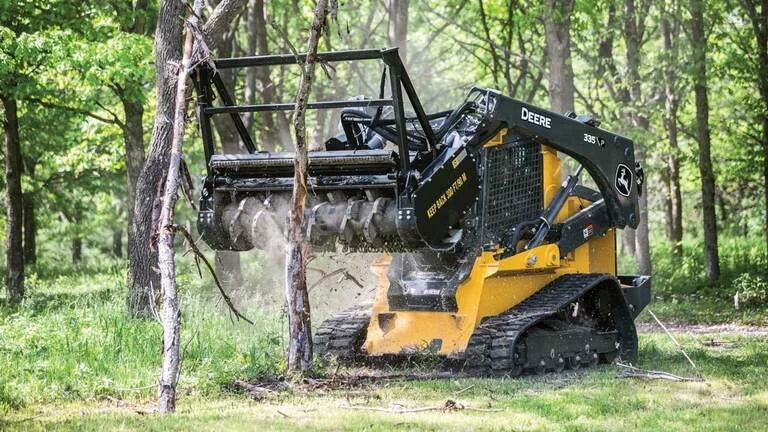
Land clearing unit on a John Deere skid-steer.
If you own rural land, a farm, or a wooded property, you've probably dealt with overgrown brush, invasive vines, or trees crowding out pasture. Traditional land clearing can feel like a nuclear option — bulldozers, burn piles, and weeks of disruption. Forestry mulching offers a smarter, greener alternative that's rapidly becoming the method of choice for landowners across the country.
What Is Forestry Mulching?
Forestry mulching is a single-machine land clearing process where a specialized mulching head — mounted on a tracked or wheeled carrier — cuts, grinds, and shreds trees, brush, and vegetation in one pass. The resulting organic material is spread evenly across the ground rather than hauled away or burned.
According to the Wikipedia entry on forestry mulching, heavy-duty forestry mulchers can clear up to 15 acres of vegetation per day depending on terrain, density, and type of material — a pace that traditional methods simply cannot match.
Key Benefits
Soil Protection: Leaving mulch on-site prevents bare soil from being exposed to wind and rain, dramatically reducing erosion.
Nutrient Return: As mulch decomposes, it releases organic nutrients back into the ground, naturally enriching the topsoil.
Cost Savings: Combining cutting, grinding, and spreading into one step eliminates hauling and disposal costs.
Speed: Forestry mulching can be up to four times faster than traditional land clearing methods.
No Burn Permits Required: Unlike controlled burning, mulching typically doesn't require permits or create air quality concerns.
Who Should Consider Forestry Mulching?
Forestry mulching is ideal for residential property owners looking to clear land for a home site or garden, farmers reclaiming pasture from woody encroachment, developers preparing land for construction without stripping topsoil, and landowners managing invasive species or fire risk.
Authoritative Resources: